Consent is key. Today, more and more customers are becoming increasingly aware of the importance of data privacy and getting cautious about sharing their information online. As a result, anonymous tracking without permission is gradually being phased out in favour of a consent-first approach that requires customers to authenticate themselves before any data can be collected or processed. The emergence of this new approach has had far-reaching implications for companies that rely on third-party customer data primarily for their operations.
Companies, especially in the digital commerce sector, want to remain compliant with data privacy regulations while ensuring that their customer experience remains consistent and relevant across multiple devices and channels. This shift has resulted in the development of new technologies that enable companies to use their own first-party data for targeted marketing campaigns, without relying heavily on third-party sources. And that's why, Customer Data Platforms, are becoming essential components of the modern digital infrastructure.
What is a Customer Data Platform?
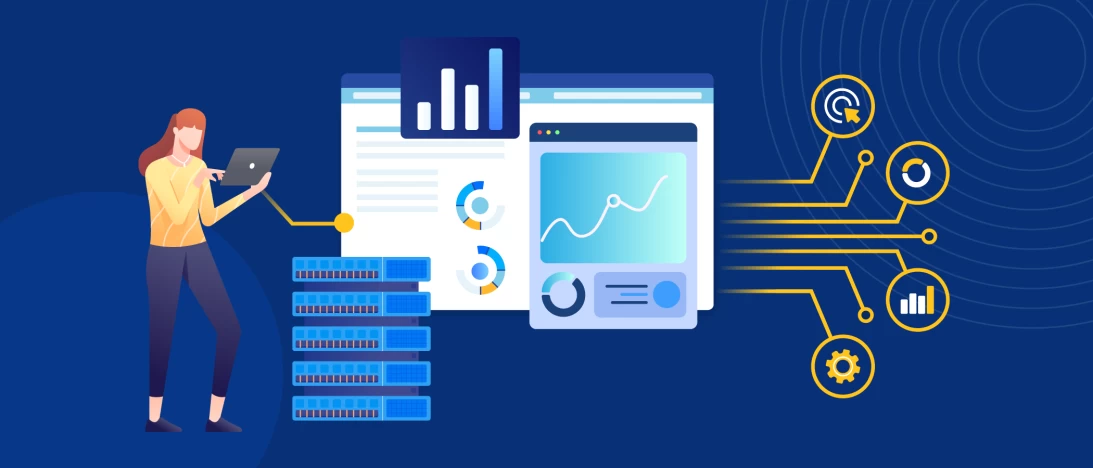
The CDP Institute defines a customer data platform as “packaged software that creates a persistent, unified customer database that’s accessible to other systems.” It enables companies to combine and aggregate data from multiple sources into one place, giving them an all-encompassing view of their customers.
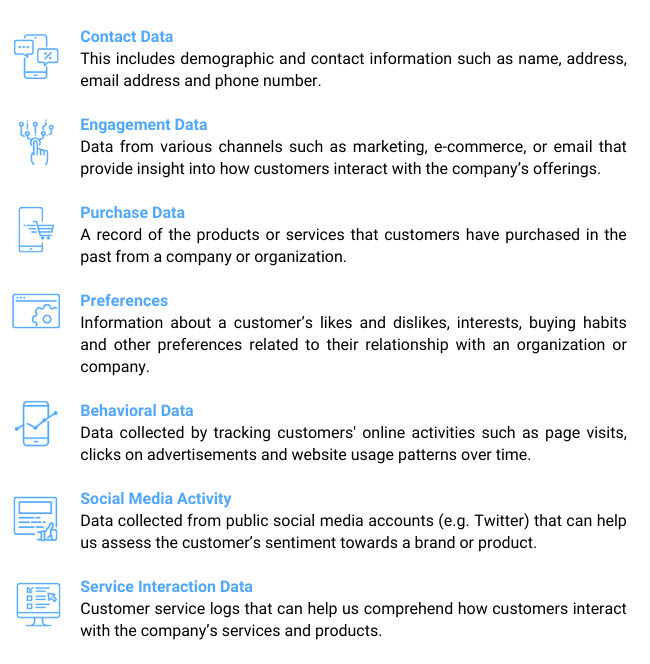
To get the most out of this technology, companies need to collect a diverse range of data from their customers such as:
CDP provides a unified view of customers interests and interactions across all marketing channels through identity resolution and ID stitching. This allows businesses to provide real-time interactions, personalized messaging and predictive analytics to create a more engaging user experience. With the demand for omnichannel experiences on the rise, CDP usage is expected to continue to grow as it focuses on the individual needs of consumers by providing tailored experiences. In fact, as per Fortune Business Insights, the customer data platform market is growing at an astonishing rate, with projections of a 25.4% CAGR between 2022 and 2029. This will take the market from its current value of $1.42 billion to an estimated $6.94 billion in just seven years– a tremendous jump!
There are multiple touch points where a customer interacts with a brand as they move from various devices and channels, and they need to be provided with appropriate, consistent, and personalized messaging. Traditional CRMs and DMPs have limitations when it comes to tracking cross-channel activities, making it hard to measure success or personalize experiences. Thanks to CDP, businesses can now take advantage of the customer journey and turn it into actionable insights.
Harness the Power of Data-Driven Decision Making with CDP
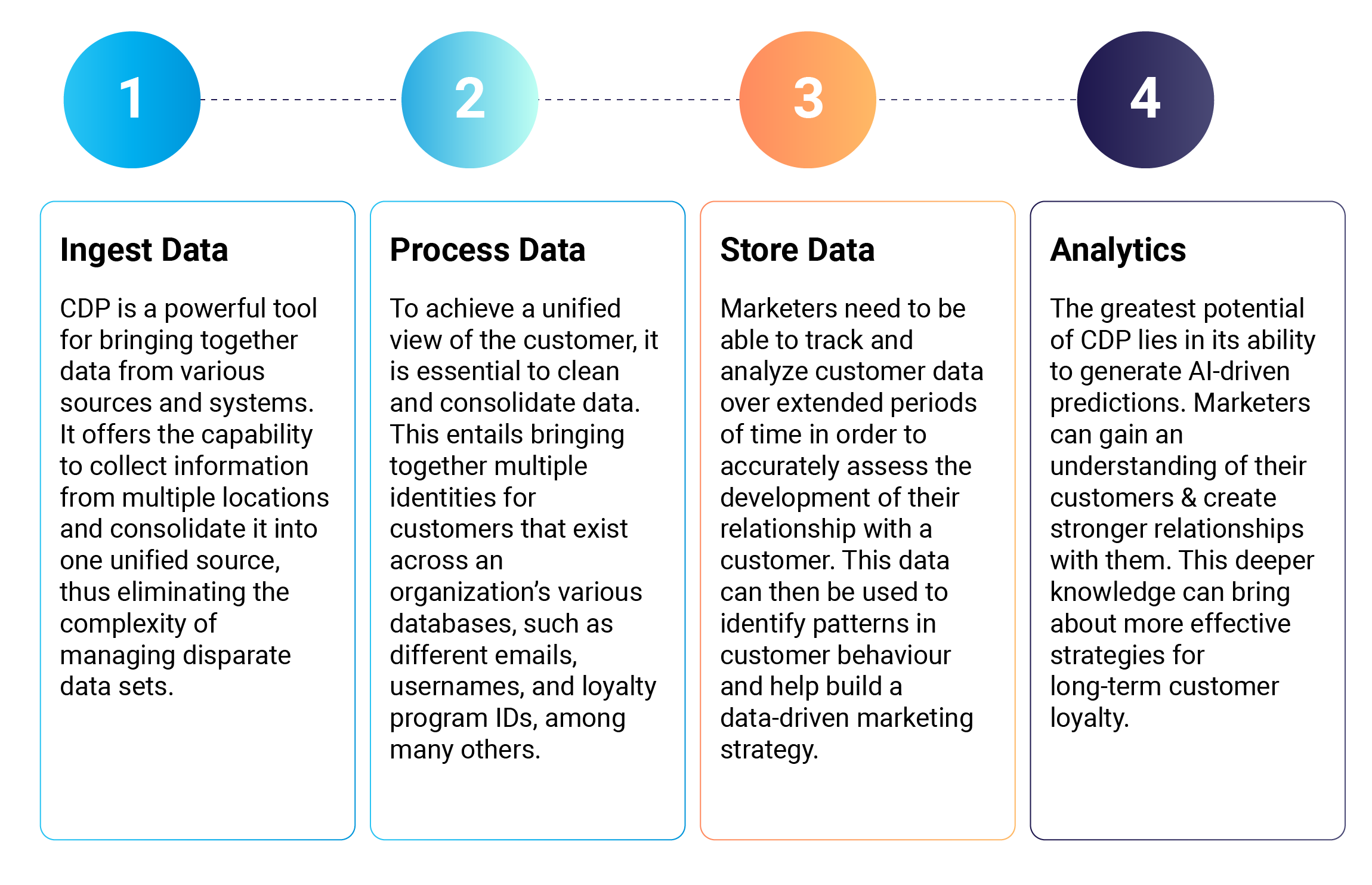
The key to building more meaningful customer relationships is data. Through CDPs, companies can acquire data from various sources, process and clean it to create a single view of their customers, store this data for long-term analysis, and finally use analytics and AI to predict customer behavior and personalize offers.
Gaining Actionable Insights into Customers: Top 10 use cases of CDP
- Data unification: CDP allows companies to bridge the gap between disparate systems and create a single view of customers across all touchpoints. By unifying CRM, marketing, commerce, and service data into one platform, you gain useful insights into customer behavior, and further resolve customer identities by merging information from different sources so that each individual has a unified profile.
- Audience segmentation & suppression: Businesses can quickly create powerful audience segments for marketing campaigns, and also categorize suppression audiences to prevent targeting irrelevant prospects. With its advanced segmentation and filtering capabilities, CDP allows businesses to target the right people with the right message at the right time— all leading to higher conversions and ROI. Teams can create flexible audience segments using drag-and-drop functionality, and further activate the segment across channels. For instance, your marketing professional can team up with the Customer Support team to create a suppression audience for marketing and advertising campaigns based on open support tickets. This tactic can ensure that customers with unresolved issues are not receiving additional communications from the marketing team.
- Delivery management: With CDP, businesses can control their cross-channel spending and target customers more effectively in their preferred channels. This helps in streamlining customer engagement communications while keeping costs low and ensures that all communication is compliant with channel-specific consent rules and customer preferences.
- Customer identity resolution: Unifying customer profiles across all customer touchpoints can be a tricky yet important task. It requires merging customer information from various systems to create a single ID and record, cleaning and de-duplicating the data to match identities for customers who have multiple identities, and connecting identities, engagement data, orders, loyalty, and marketing journeys. By doing this, brands can move away from audience-based marketing and closer to one-to-one marketing, offering an enhanced customer experience. Identity graphs are a great tool to help brands with this task, as they help to track and consolidate user profiles from various devices, platforms and systems to create a complete view of customers and their activities.
- Persistent data storage: Persistent data storage is vital for marketers who want to keep track of their customer’s behavior and preferences over extended durations. CDP allows them to understand how their relationship has changed and identify trends in their data. This enables them to make informed decisions and create better customer experiences
- Replacing third-party cookies: One of the biggest challenges for marketers in the near future is the elimination of third-party cookies from Google's Chrome browser, set to take effect by late 2024. To help counter the lack of data from outside sources, CDPs are becoming increasingly popular as a way to maximize first-party data. In fact, businesses can create personalized campaigns and experiences without relying on third-party tracking.
- Managing data from anywhere: With a CDP, you can easily activate, capture, and unify data from anywhere across your organization, no matter where it's stored. And with powerful analysis tools like Tableau or Marketing Cloud Intelligence, you can make sense of all that data to gain valuable insights into customer behavior.
- Consistent activation across channels: CDPs are an invaluable tool for businesses looking to foster relationships with their customers across different platforms. For customers that have already been identified, CDPs allow businesses to provide consistent experiences across all channels. For those that are anonymous or repeat customers, they help create personalized experiences and notifications. Intermediaries like LiveRamp allow businesses to create customer journeys, segment audiences, and use machine learning models to optimize their campaigns. All in all, CDPs are the key to creating a unified and personalized customer experience.
- Multi-touch attribution: CDPs can provide key insights into inbound traffic sources and associated campaign information, by way of UTM parameters. This data can be used to determine the effectiveness of different channels in terms of click-through revenue attribution. Furthermore, they can also capture additional data points such as page views and transactions, enabling a more comprehensive analysis.
- Ensuring privacy compliance: Data privacy regulations are making it increasingly difficult for businesses to keep track of their customer's data. CDPs provide an answer to this challenge by creating a centralized repository for customer data, allowing organizations to manage and protect customer information. Through their secure centralized platform, companies can easily comply with data privacy laws such as the California Consumer Privacy Act (CCPA). This allows businesses to quickly access customer data when requested and delete it when requested, all while maintaining a secure environment.
Uncovering Insights with Customer C360 View
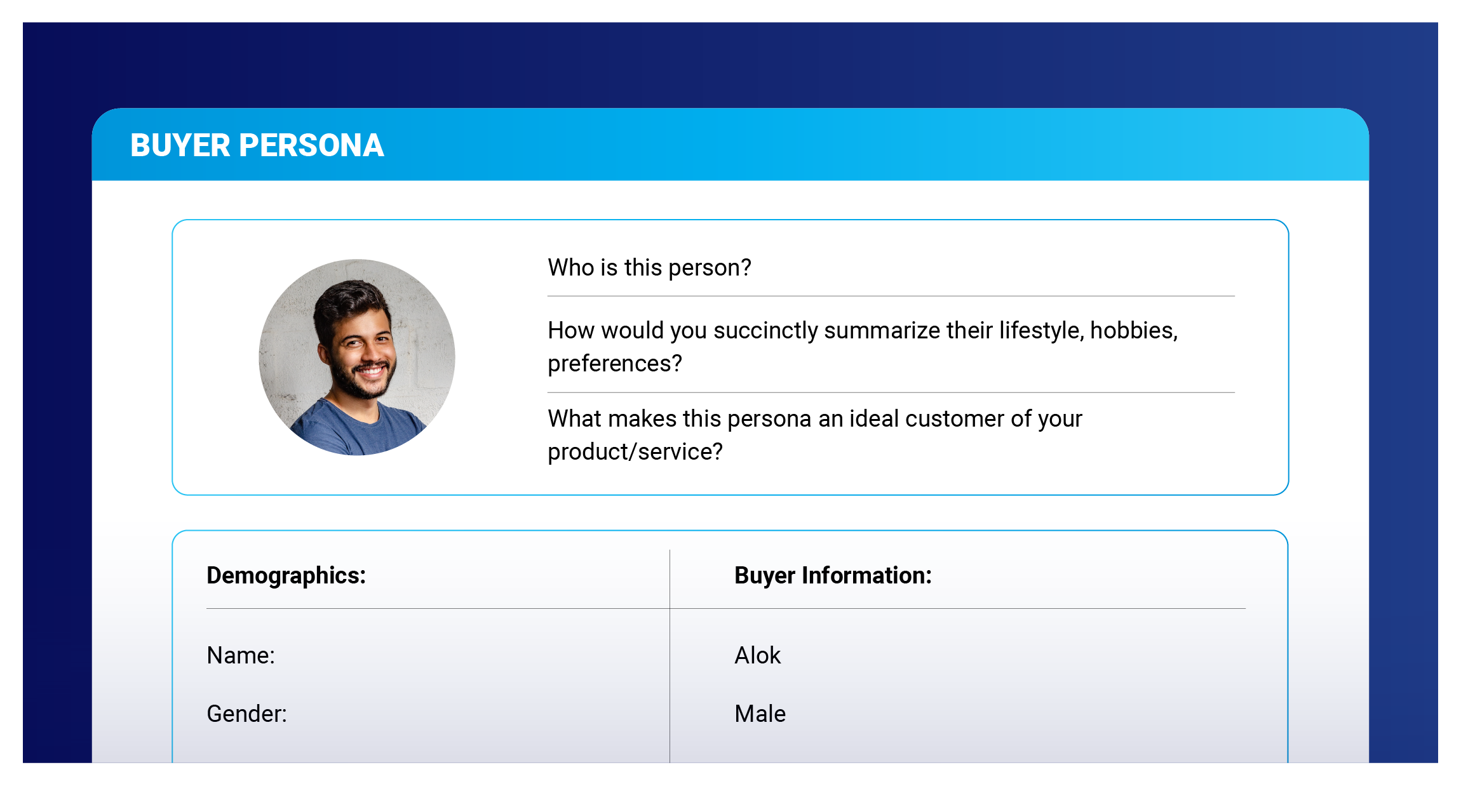
Imagine a 30-something professional male, Alok, living in Delhi who loves to follow sports. He may be price sensitive, preferring discounts and other offers, but he also likes convenience when it comes to shopping– he'll choose the retailer that has what he needs with the least amount of hassle. By understanding his demographic information as well as his psychographic and behavioral data, you can tailor your marketing strategies to reach him in a way that stands out from the noise. You can provide discounts or special offers at times when you know he likes to shop or show up on channels where you know he spends time online. With an evolved understanding of this buyer persona, your team can create more relevant and personal messages that will help drive real conversions.
Creating a personalized customer experience is no longer an abstract concept – it’s now possible with the C360 data model and CDP. With the unified customer view, marketers can create tailored customer journeys that span multiple channels including emails, notifications, and direct mail giving an omni-channel customer experience. Moreover, individualized customer journey maps can also help businesses maximize the customer lifetime value, reduce churn, and further improve customer satisfaction,
Moreover, AI-driven CDPs can use predictive modeling to anticipate customer behavior and deliver even more tailored experiences. CDPs can also help connect first-party data, or the information collected directly from customers through forms and surveys with the second-party data shared with partners or adjacent groups to enhance your understanding of customer profiles. Additionally, CDPs can also ingest real-time data for a more holistic customer view. By deploying AI-enhanced analytics on these datasets, marketers can segment their target audiences more efficiently and deliver value-driven experiences that will boost conversions.
How CDPs can help revolutionize customer experiences
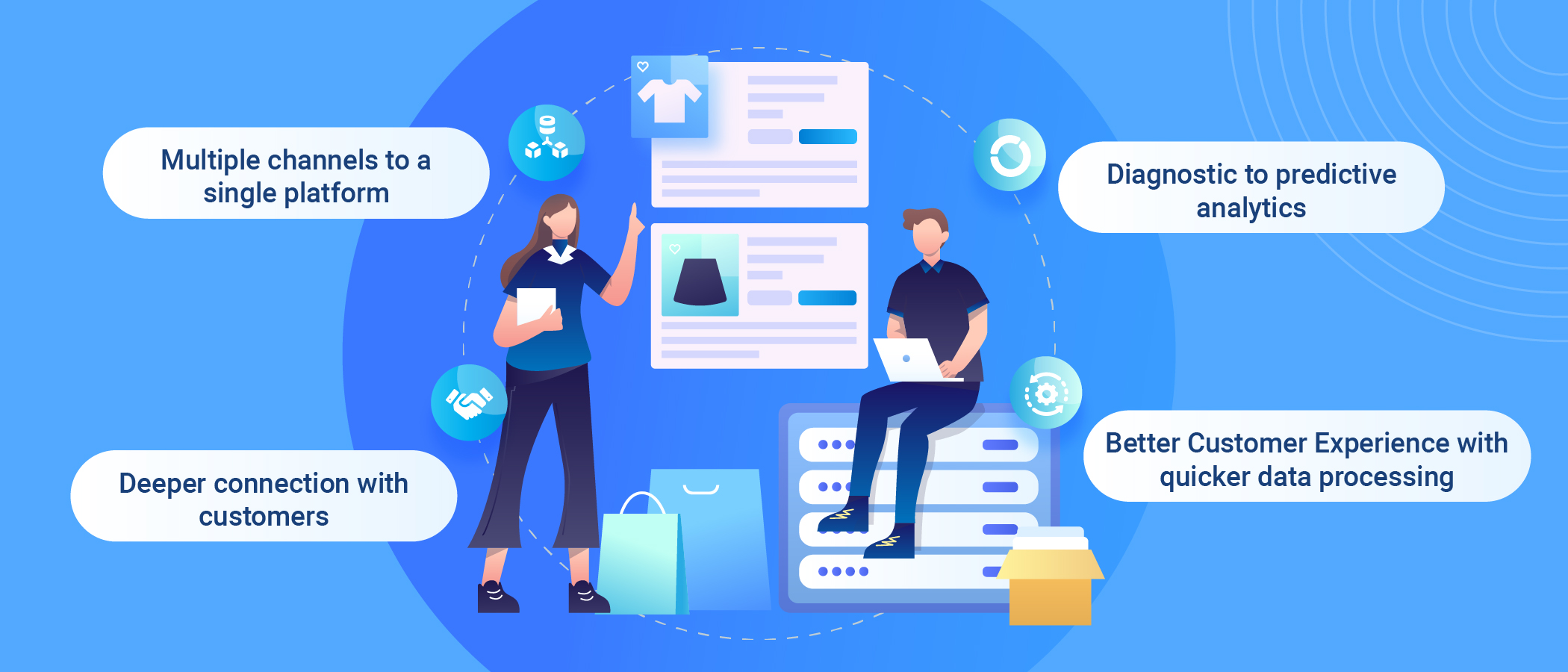
Marketing has become much more than just promotions and campaigns. It's now about creating meaningful connections with customers by anticipating their needs, personalizing experiences, and orchestrating journeys across multiple channels. Here are a few ways that CDPs help marketers make the transition from traditional marketing tactics to a more connected customer experience in their digital commerce strategy.
- Moving from Multiple Channels to a Single Platform: The days of channel-focused, siloed marketing is quickly becoming a thing of the past as marketers strive to create connected customer experiences. By leveraging platforms that bring together Email Marketing and Digital Marketing teams (as well as Sales and Service), marketers can better treat customers as individuals navigating multiple touchpoints, rather than segmenting them into isolated channels. This allows for more meaningful engagements at each step in the customer journey, leading to higher levels of satisfaction and loyalty.
- Developing a deeper connection with customers: Today, brands are striving to deliver a more connected customer experience – one that is tailored to the individual. To do this, they need to link customers’ identities across databases and systems of engagement in order to recognize them whenever they interact with the brand. Take, for example, Alok. When he visits the store to purchase sports merchandise, the brand should be able to recognize his identity and provide him with personalized recommendations or discounts based on his past purchases. The same is true when he shops online – if the brand can link his identity from one platform to another, they can provide him with tailored offers and experiences that are unique to him. By linking identities across multiple digital touchpoints, brands can ensure customers receive an experience that is as connected as possible.
- Moving from diagnostic to predictive analysis: As brands increasingly recognize the power of artificial intelligence and machine learning, marketing is evolving from an approach of diagnosing customer behavior to one of predicting it in real-time. Companies need to ensure they have access to unified data sets containing information about all their customers, so they can identify potential next steps for each individual. For instance, using AI technology, such as propensity, churn prediction, segmentation and ML models, marketers can now use data about Alok’s journey, and millions of other customers to make predictions about what his next best move should be.
- Enhancing Customer Experience with Quicker Data Processing: The days of delayed data processing are long gone. Now, customer experience is all about speed– reacting to data in real time and delivering a seamless journey. When Alok clicks an ad, the marketer must be ready to act quickly and process that data as soon as possible in order to offer a truly personalized experience. To ensure accuracy and a better outcome overall, decisions now need to move at the same speed as the customer, that too in real-time. To do this, marketers should consider implementing flexible and cost-effective storage solutions that support various data types, including raw and unstructured data, and enable businesses to stitch past experiences together. CDPs offer a comprehensive solution that meets these requirements.
- Transitioning from Promotion to Customer Journey Orchestration: Marketing has come a long way from the days of simply prospecting and driving customer awareness. In today's digital world, it is now responsible for crafting an end-to-end customer experience. Marketers must own and manage their technology, systems, and databases to be able to personalize each touchpoint with customers. It's no longer just about getting prospects in the door, but about creating memorable experiences that keep them coming back for more.
In a world where competition is fierce and customer expectations are ever-evolving, it's essential for businesses to stay ahead of the curve. With so much time, effort and money invested in acquiring new prospects, converting them into customers and building up their brand loyalty, companies also need to ensure they're getting the most out of their efforts. That's why Customer Data Platforms are becoming increasingly important for brands looking to gain valuable insights about their users. Don't let your business fall short, make sure you're staying on top of your digital commerce game with a comprehensive CDP solution.
Exploring CDP solutions for your business? Or just looking to understand how CDP can help? Reach out to us for a conversation at contact@eucloid.com.